Get In, We’re Going to Stars Hollow
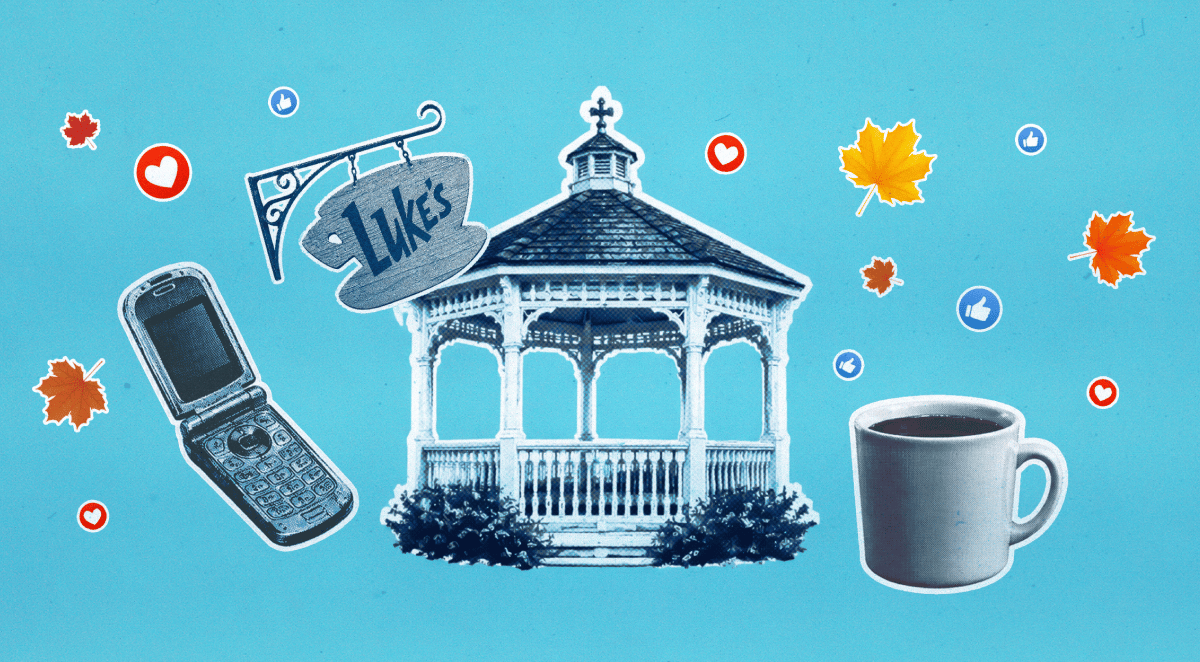
Stepping on a crunchy leaf on the ground may indicate to some that fall is approaching. For Gilmore Girls fans, hitting play on the pilot episode is the official start of fall. For 26 years, the town of Stars Hollow has dominated screens. The cozy New England town with its warm aesthetic, charm, and “coffee, coffee, coffee” has swept the pop-culture scene — and the marketing scene.
There’s a reason why Hulu and Gilmore Girls posted this on Instagram - because September 1 truly only means one thing.
That kind of cultural staying power is a marketer’s dream. Gilmore Girls didn’t invent fall, and it didn’t invent nostalgia. It didn’t even invent the cozy aesthetic. It gave people a recognizable set of cues that social media could repeatedly activate.
Owning Fall: How Gilmore Girls Turned a Season Into a Social Media Moment
Zara Larsson has her midnight summer sun. Lorelei and Rory Gilmore have the season of fall.
It’s not just that Gilmore Girls is a fall show. It’s a brand with consistent, repeated visual and emotional cues. Each season begins with a new school year for Rory, and with it, the town follows suit: the gazebo, the diner, and every corner of her small Connecticut town are decked out for the fall and winter months. Even the opening credits show beautiful fall foliage with “Gilmore Girls” across the screen.
For marketers, that consistency matters. The strongest brands don’t have to introduce themselves every time they show up. Their audiences already know what a certain color, sound, image or phrase means. Social media makes these associations even more powerful because people don’t just consume the cues; they use them in their own content.
As a viewer, seeing these visual cues across endless rewatches creates an association with the fall season. And thus, the “Autumn Effect” is born.
The Autumn Effect runs deep these days, especially with Instagram and TikTok culture. It drives fan behavior the second a leaf falls to the ground. Gilmore Girls has developed its own aesthetic, and fans are using it to create their own content.
The "Romanticization of Fall” isn’t merely a trend, but something people live by. In simple terms, romanticizing fall means treating every day like a scene from a movie and overall feeling like the main character in your life. And, of course, this is exactly what it feels like watching Gilmore Girls.
Each year, it becomes increasingly harder to miss the hundreds of Instagram Reels telling viewers to take that fall road trip to the Connecticut town that inspired Gilmore Girls. At least 10 Gilmore Girls-inspired videos come up on my feed a day, and I won't lie, I can't wait to go to every fall festival this year to pretend I’m in Stars Hollow.
Maybe I’ll wear a cable-knit sweater while I’m at it.
And it’s important to note: the Autumn Effect goes beyond screens. Fans even go so far as to hold Gilmore Girls-themed events across the country throughout the fall, from a hardcore three-day event that transforms a real Connecticut town into Stars Hollow to a local neighborhood event filled with a farmer’s market and homages to the show’s characters.
Social media causes a ripple effect for this trend. People see content romanticizing small parts of life and want to do the same. These events allow people to live out this popular fall aesthetic, so they share their experience and start the cycle all over again.
And let’s be honest, not everyone is attending these events in person, but that doesn’t mean they aren’t jumping on the Gilmore Girls bandwagon.
Another behavior resulting from the Autumn Effect is what I call association. As soon as fall hits, Instagram and TikTok’s trending audios are suddenly filled with sounds from Gilmore Girls. This Hollister post has over 28,000 likes, showcasing its new clothing line and capitalizing on the show’s popularity without ever mentioning it by name, further emphasizing the show's innate association with the season.
For a brand, becoming associated with a feeling or moment without needing to explicitly state the connection every time is the holy grail. Hollister doesn’t have to say “Gilmore Girls” for the audience to make the connection. The audio, styling and seasonal context do the work. That’s an important social lesson: sometimes the most effective brand integration is the one that understands the cultural conversation well enough to participate without hijacking it.
This Reel creates an overlap from the Autumn Effect into something else. It has the unmistakably autumn Gilmore Girls audio, while the caption leans into early 2000s nostalgia. One post, two mechanisms: the sound sells the season, the caption sells the memory. Nostalgia plays a big part in why people keep coming back — and the force behind the show knows it.
Why Gilmore Girls Keeps Fans (and Brands) Coming Back
Everywhere you look, the rapid developments of AI and technology can make the world feel weird and surreal. How am I not batting an eye now when I see a self-driving car? Or seeing more screens at concerts than faces? What we are experiencing would have sounded out of this world even ten years ago. Regardless of the time period our nostalgia comes from, we all want to return to a simpler time.
Maybe Luke was right about the no cell phone rule in the diner. All it took was a good cup of coffee and the latest town news to have a good time.
Fellow Nebo Intelligence team member Joy Feagan’s blog “How We Market the Past Shapes How We Live in the Future” captures this sentiment: people crave and feel nostalgic towards times they might not have even lived through. According to GWI, over a third of Gen Z are nostalgic for the ‘90s and early 2000s, which is why they also enjoy (or at least tune into) the revival of childhood trends.
For example, the recent release of Camp Rock 3 had people reminiscing about the original 2008 film. Even though Gen Z called out Disney for using cringe TikTok-slang dialogue and overall deemed the whole film manufactured, the attempt left people feeling nostalgic for the era (and maybe just better acting, too).
So why do I mention this? Nostalgia plays a big role in what Gilmore Girls is today.
Gilmore Girls didn’t have to manufacture nostalgia for its original audience. The show is the simpler time people crave, which is why brands have attached themselves to it. To date, the show has done partnerships and collabs with numerous brands, like Vera Bradley, Hobby Lobby, Hallmark, Little People, and a 2024 Walmart holiday commercial.
Some of these partnerships have also helped revive brands like Vera Bradley, highlighting two nostalgic forces coming together to become relevant again. (And every girl in the early 2010s can tell you what Vera Bradley purse they had).
With the fans buying, they’re also begging for more.
And social media has made nostalgia unusually easy to activate. A television show that once lived on a screen now lives in an endless stream of reels, TikToks, memes, sounds and fan accounts. Every piece of new content gives someone else an excuse to remember (or discover) the original. In other words, nostalgia isn’t just something audiences feel. On social media, it’s something they can participate in.
And lucky for Gilmore Girls, the nostalgia will never run out thanks to our good friend: streaming services. Take a person like me, born in 2003 (three years after Gilmore Girls first aired). I first watched Gilmore Girls in the fall of 2023, and although I was in diapers when Rory was going to college, the show still reminded me of my childhood.
With many younger viewers experiencing the show for the first time, it gives new life to a 26-year-old show. The nostalgia isn't static; it is constantly being seeded in a new audience, who will one day be nostalgic for their own Gilmore Girls discovery moment.
From Stars Hollow to Beyond…
Gilmore Girls' brand doesn't just live on screen. It lives in the behavior it inspires. The show doesn't just have an audience — it has an audience that acts. Fans build the events. Fans demand the reboots. Fans buy the products. Fans hit play, every fall, every single time.
So, the next time you spot a Gilmore Girls tote bag for sale, or hear about another documentary fifteen years from now, remember: a consistent brand doesn't just build an audience once. It actively shapes what an audience does, season after season, years and years later.
That’s the real Autumn Effect: when a brand becomes so deeply associated with a feeling that its audience starts doing the marketing for it.

Comments
Add A Comment